Cyr-Racine Research Group

Exploring the dark Universe, one particle at a time.

Theoretical particle cosmology at the University of New Mexico — dark matter, cosmic evolution, and the physics of cosmological neutrinos.

Department of Physics & Astronomy · University of New Mexico, Albuquerque, NM

“Equipped with his five senses, man explores the universe around him and calls the adventure Science.” Edwin Hubble
Who we are

Welcome to the dark Universe

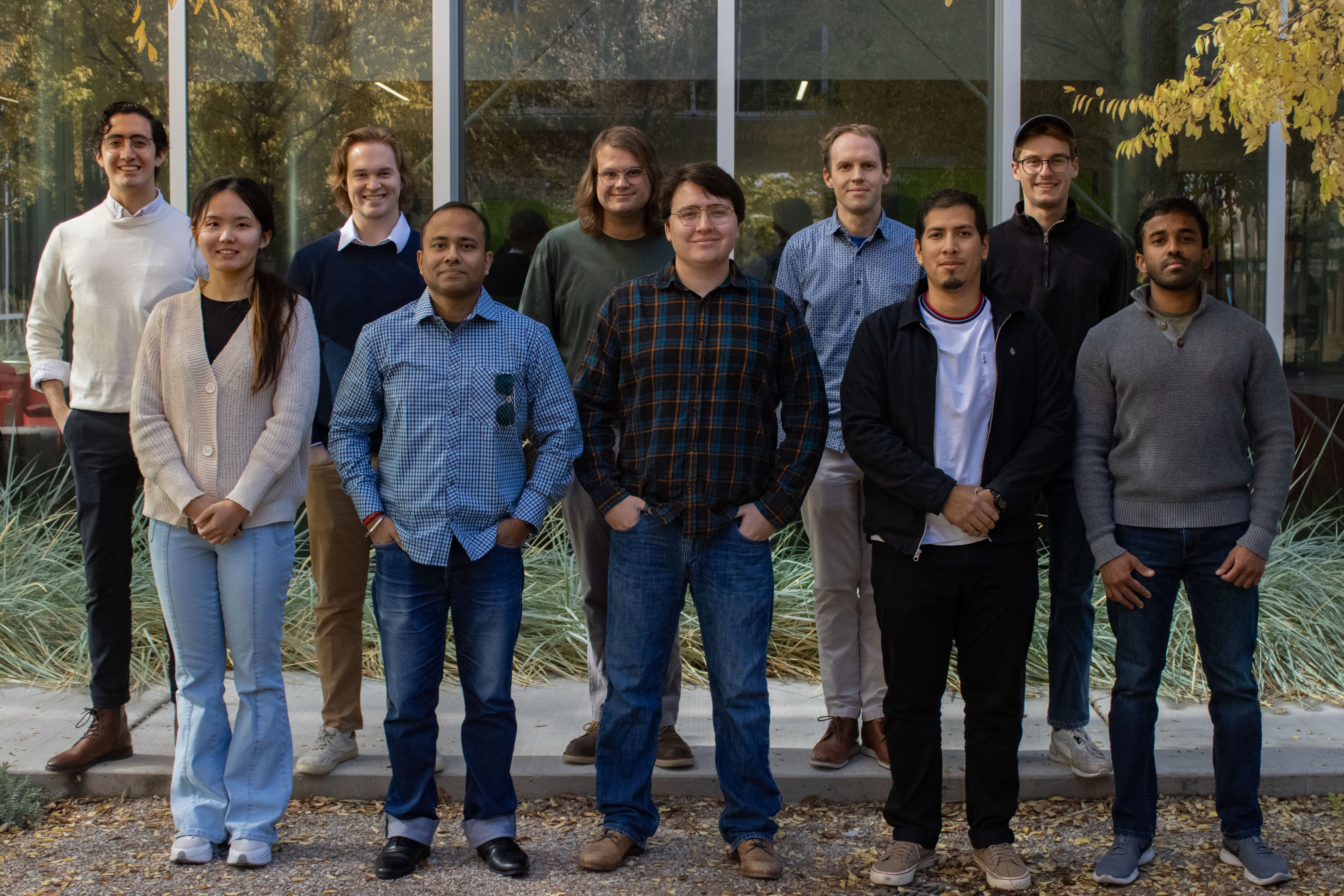
We are the theoretical particle cosmology group within the Department of Physics and Astronomy of the University of New Mexico in Albuquerque, NM. Our research lies at the interface between particle physics, cosmology, and astrophysics, including dark matter and neutrino physics. Some of our main research interests are listed below. The group is headed by Associate Professor Francis-Yan Cyr-Racine. Our group is funded by the National Science Foundation, the Space Telescope Science Institute, the Heising-Simons Foundation, the Department of Energy, and the Robert E. Young Origins of the Universe Fund.

Research interests

What we work on

Illustration representing dark matter

Dark Matter

Dark matter forms about 85% of all the matter in the Universe, but we still do not know what it is made of. Does it interact at all with the matter that you and I are made of? Does it interact with itself? How can we constrain its particle properties through astrophysical observations, including those of Milky Way satellites and of strong gravitational lenses? These are the kind of questions that my research is answering.
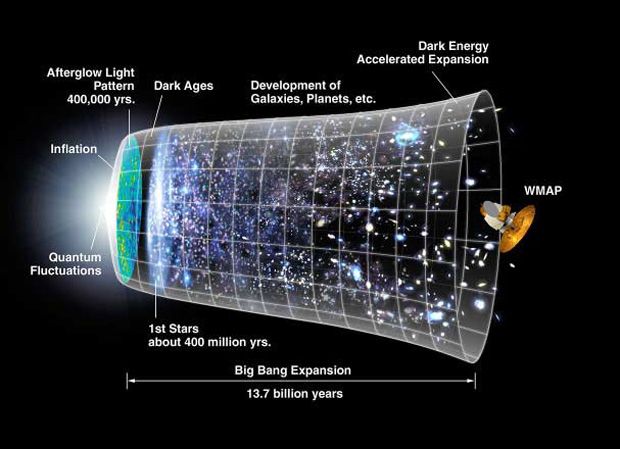
Illustration representing cosmic evolution

Cosmic Evolution

Our current model of the Universe leaves many questions unanswered, including the fundamental nature of dark matter and dark energy. The presence of new physics beyond the Standard Model could influence the evolution of the Universe in important ways and leave subtle signatures in cosmological data. The current possible discrepancies between different cosmological data sets could be pointing towards yet unknown cosmological physics.

Abstract illustration of a graph neural network overlaid on a cosmic web

AI/ML Tools for Cosmology

Surveys like LSST at the Rubin Observatory are producing cosmological datasets of unprecedented scale and complexity, demanding a new generation of analysis tools. We are building fully differentiable cosmological pipelines that use machine learning to dramatically speed up searches for new physics in this data. These tools let us efficiently test whether neutrinos and other dark-sector particles have nonstandard interactions that leave imprints on cosmic expansion and the growth of large-scale structure, tying cosmological observations directly to laboratory-based particle physics experiments.